
There is a particular kind of unpacking that happens at camp. The big pieces are easy to see: the vehicle, the shelter, the chairs. It is the smaller things that send you back through the same box three times.
Pack around a rhythm
A useful packing system begins with the order in which you use things. The first cup of coffee, the evening meal and the final tidy-up each have their own small collection of objects. Keeping those objects close to one another makes the arrangement easier to remember.
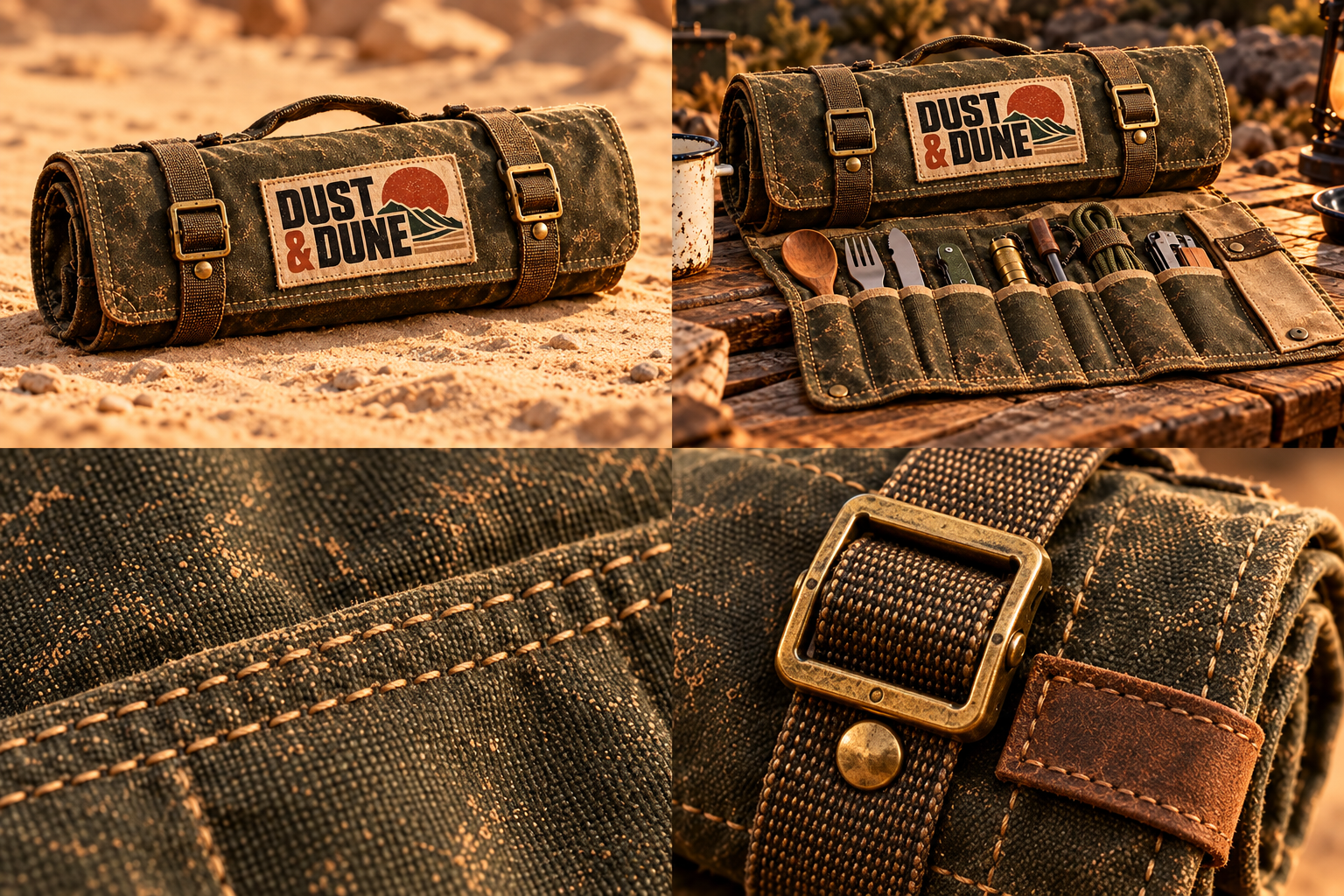
Start with one routine rather than the whole vehicle. Lay out the items that belong to it, then look for a format that keeps them visible. A roll, a pouch or a smaller box can work well when the contents have a clear relationship.
Give the everyday pieces a consistent home. When an object returns to the same place, packing becomes less of a search and more of a check. The system does not need to be elaborate; it needs to make sense to the people using it.
Leave a little room. A tightly packed arrangement can look satisfying before a trip, but a system that allows for a damp cloth, an extra utensil or a change in routine is often easier to live with.
The aim is a quieter arrival. Less time opening containers. More time noticing where you have stopped. A good home for the small things gives a little of the evening back.