A useful object begins with a relationship: between a hand and a handle, a surface and what rests on it, a room and the things we choose to keep there. Form makes those relationships visible.
Form is a relationship.
Looking at a vessel, we first notice its outline. A broad shoulder can make a small piece feel grounded; a narrow opening can make the same volume feel enclosed. Neither choice is decorative alone. Both change how an object is encountered.
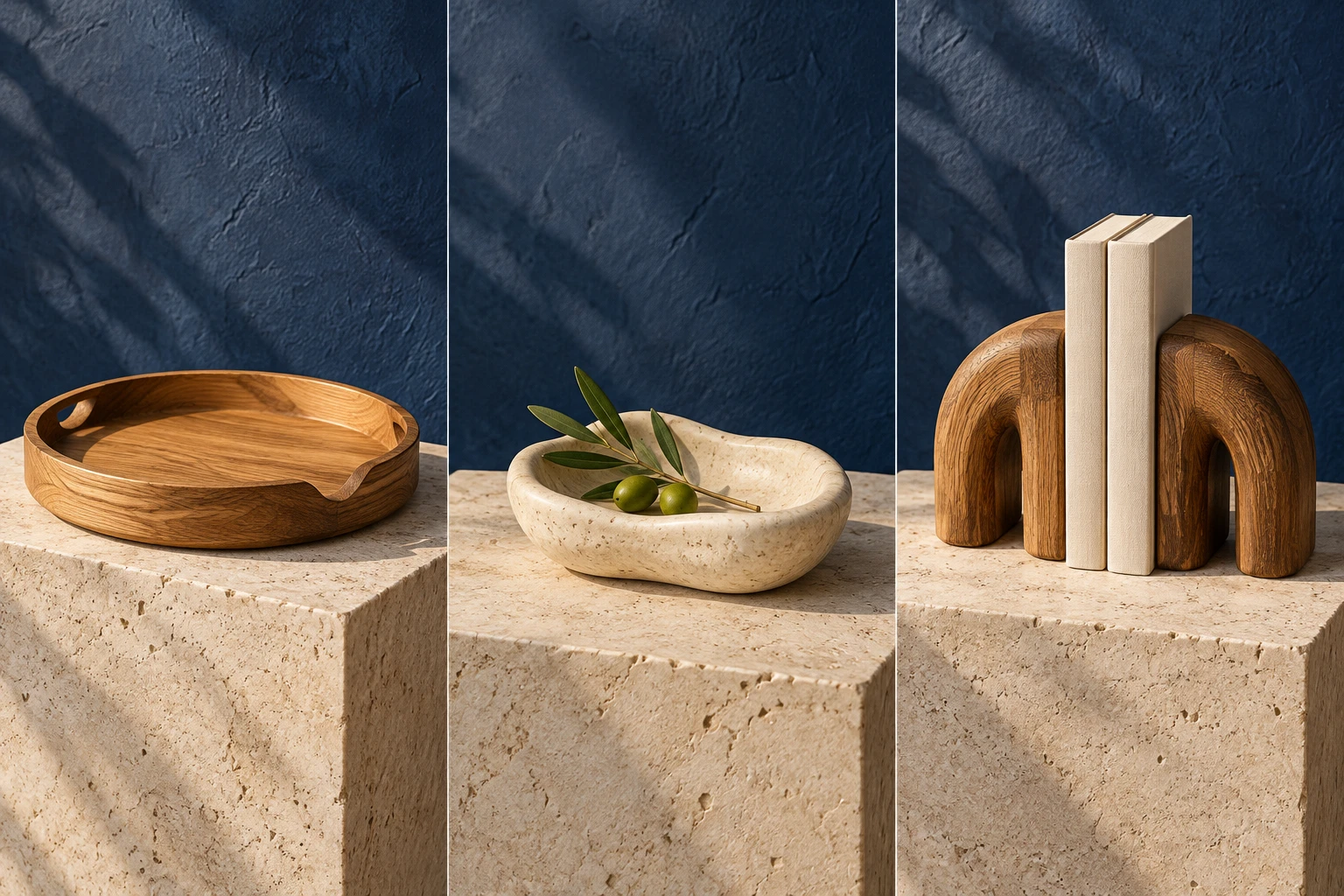
The space around an object matters too. Leave a little room between pieces and their silhouettes become clearer. Place contrasting volumes together and each gives the other a new scale.
Material brings another kind of information. The texture of clay catches light differently from timber or woven cloth. A quiet palette can let those differences lead, without needing every surface to compete.
Function offers a useful constraint. A tray needs an edge that belongs to its shape. A cup needs a handle that makes sense with its body. Small decisions can give familiar objects a distinct character.
The aim is an everyday object that continues to invite attention: useful enough to live with, considered enough to look at again.