Collaboration starts before the finished object. It begins with a useful question, a shared reference and a willingness to let another perspective change the direction of the work.
A shared starting point.
A clear brief gives that conversation shape. What is the object for? Where will it live? Which qualities matter most? These questions establish a common starting point without deciding every answer in advance.
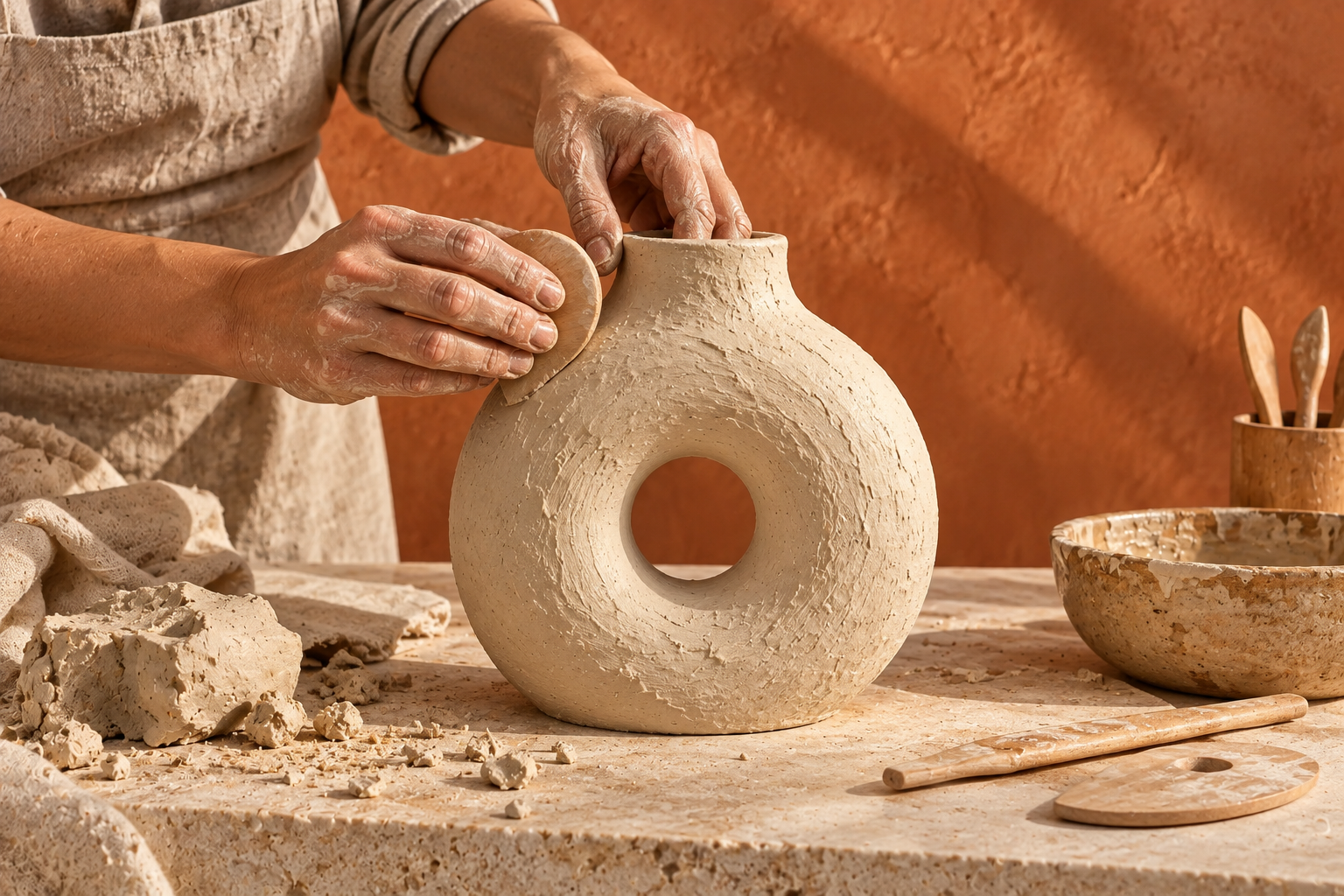
Material experiments make ideas easier to discuss. A small surface sample or a simple volume can reveal more than a long description. It turns an abstract preference into something that can be compared and refined.
Feedback works best when it names a specific relationship. The handle feels too small for the body. The colour loses contrast against the weave. The edge interrupts the silhouette. Precision gives the next iteration a purpose.
Credit belongs alongside the work. Contributions should be described clearly, with agreement about names, images and how the process is presented. A collaborative story needs the same care as the object itself.
The result can hold several perspectives while remaining coherent. That is the interest of making together: a piece arrives somewhere that no single starting point could have fully predicted.