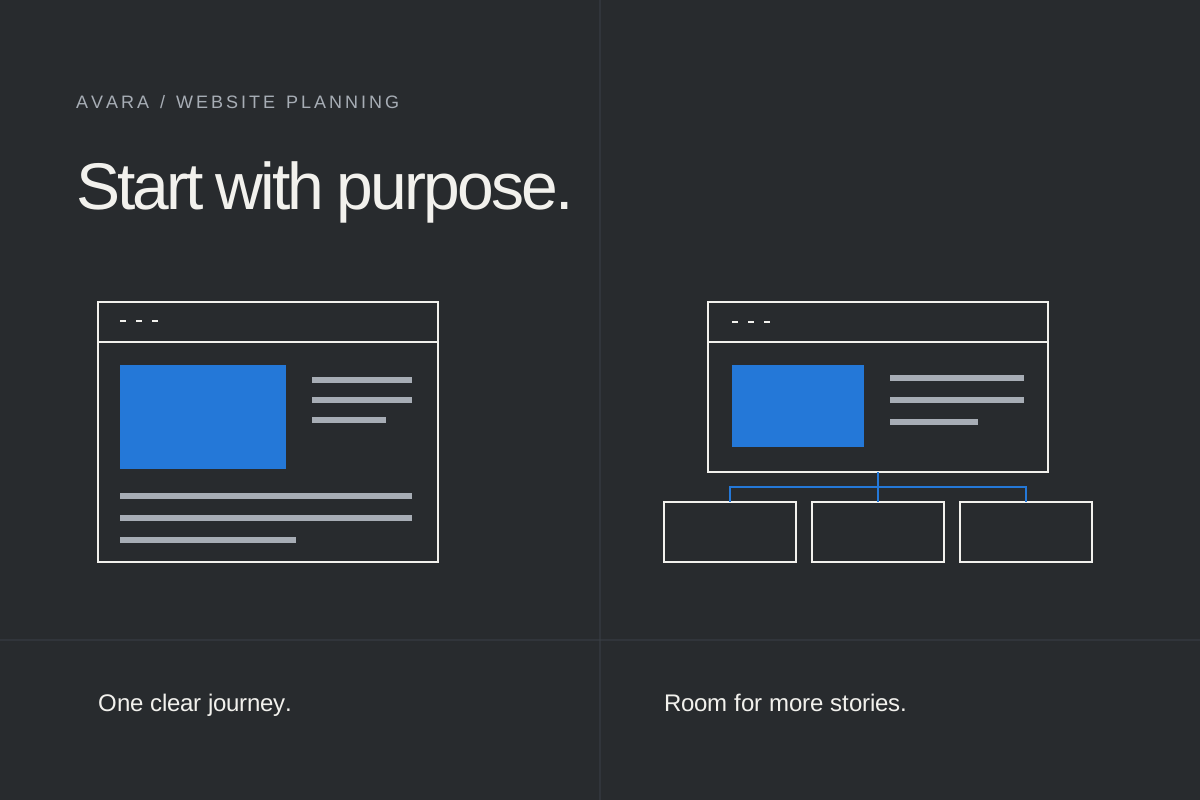
Before choosing how many pages your website needs, decide what someone should be able to understand and do when they visit. A focused service business, a studio with a growing portfolio and a shop with a product catalogue have different things to explain.
The right structure gives those things enough room. Here are a few questions to bring to your first website conversation.
Start with the next step
Write down the most useful action a visitor can take. It might be requesting a quote, booking a conversation, exploring your work or choosing a product.
Then list what that person needs to know before taking the action. For a local service, that might include the service area, the work offered, a few examples and a way to get in touch.
A useful website brief starts with a customer question, rather than a page count.
When one page makes sense
A one-page website can suit a business with a focused offering and a clear enquiry journey. Its sections can introduce the business, explain the service, show selected work and lead into contact details.
Before choosing it, ask:
- Can we explain the main offering without squeezing unrelated services together?
- Can visitors reach the information they need through clear section links?
- Do we have a straightforward next step?
If the answers are yes, a focused page may be a useful starting point. You can explore our one-page website concepts to see different approaches.
When separate pages help
Separate pages give different subjects their own space. They can be useful when a business needs detailed service explanations, project stories, location information or a collection of articles.
Think about the questions behind each page. A visitor comparing a service may need scope and process information. Someone exploring a project may want to understand the brief, the decisions and the finished experience.
Choose page names that describe those subjects clearly, and connect related pages with useful links.
When you need a shop
An online shop introduces a different set of decisions. Products, variants, delivery information, payment arrangements and order handling all need consideration.
A visual storefront concept can help you explore the design, but it should be clear whether checkout and payments are actually connected. Our portfolio demos show design and interaction ideas; a production shop needs its own working commerce setup.
Plan for what comes next
List what you expect to add over the next year: services, portfolio projects, articles or products. That helps identify which parts should be easy to update independently.
The website does not need every future feature on day one. It does need a sensible place for the content you already expect to create.
Bring these notes to your brief
- Who is the website for?
- What should a visitor understand?
- What should they do next?
- What content do you already have?
- What will you want to add later?
Those answers are a useful starting point for choosing a structure. If you would like help turning them into a website brief, start a conversation with Avara Digital.