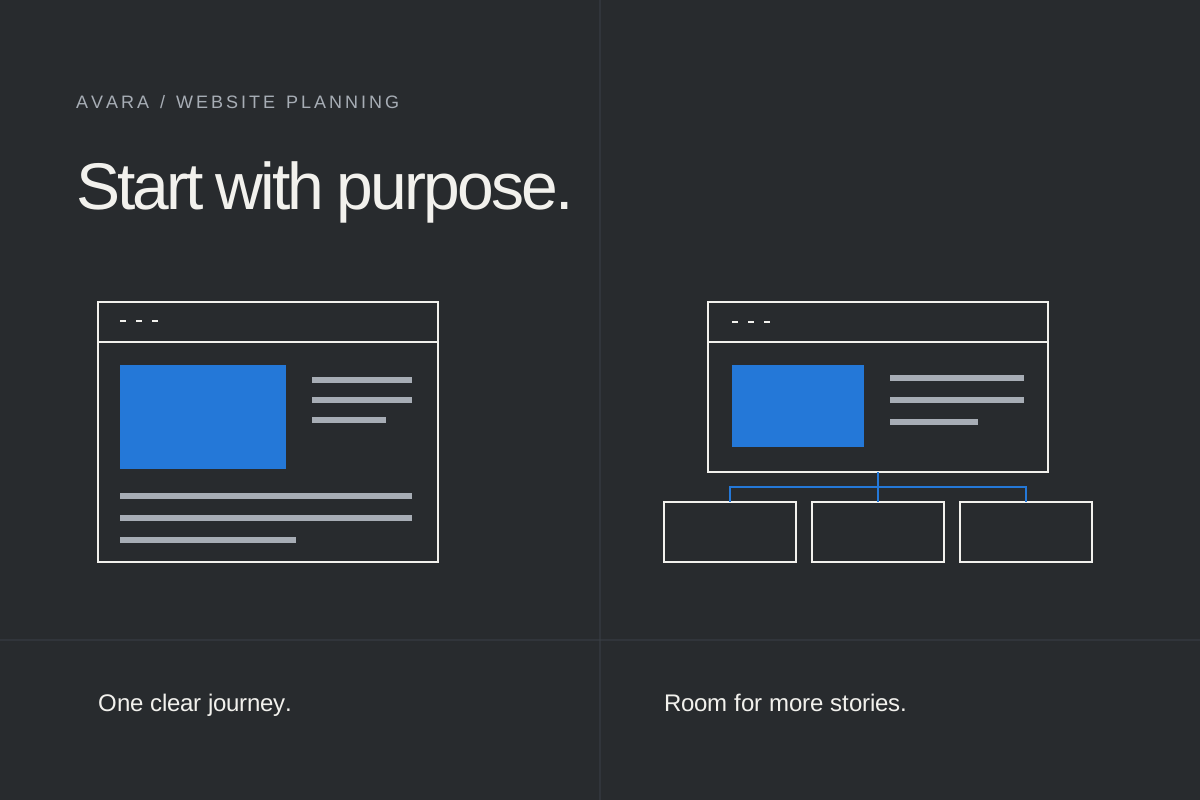
A website brief does not need to be long to be useful. Start with a few clear answers, then use the first conversation to work through what is still uncertain.
Who are you trying to reach?
Describe the people who need your business. Include the questions they ask, the information they compare and what might make them hesitate. A website for a local repair service has a different conversation to have from a specialist consultancy.
What should the website help them do?
Choose the main next step: enquire, book, explore or buy. Other actions can still exist, but knowing the priority helps shape navigation and content.
What do you already have?
Gather your logo, brand assets, photographs, service descriptions and any approved customer stories. Note which materials are ready to use and which still need work.
- Include original image files where possible.
- Confirm permission to use supplied photographs and customer quotes.
- Flag outdated information before it becomes part of the new site.
What needs to connect?
List any existing booking, shop, enquiry or email tools. Explain what needs to happen after someone uses the website, so the design conversation includes the real workflow.
What will change over time?
Think about articles, projects, products and services that you expect to add. That tells us which parts should be straightforward to maintain.
You do not need to solve every question before getting in touch. Start a conversation with the context you have, or explore the portfolio for examples of different website structures.